Courses · Practical course in Arabic

Infrastructure Works on Site: Execution, Inspection & Acceptance

A course built on the book and site experience, ordered by the actual execution sequence: from reading drawings and site preparation to networks, roads, testing and acceptance. Lessons are in Arabic, in Eng. Ahmad’s own voice, with synced Arabic on-screen text.

  • 10free lessons (unit 0)
  • 52lessons on Udemy (units 1–4), about 9 hours
  • AR | ENsite terms in Arabic and English
  • 18+years of site experience

Two ways to learn

Free

Unit 0: drawings, references and work sequence

  • 10 full lessons, watched here on the site
  • Drawing types, stations, levels and profiles
  • Hold points, NCR, RFI and the daily report

Udemy

Infrastructure on Site: Excavation, Sewer, Stormwater & Water

Units 1–4: 52 lessons, about 9 hours · in review at Udemy

$49.99
  • Site preparation, earthworks and trenches (14 lessons)
  • Sanitary sewer networks and manholes (12 lessons)
  • Stormwater drainage and culverts (18 lessons)
  • Potable water: materials, laying and valves (8 lessons, more added as ready)
  • Worked examples from real projects and a quiz per unit
  • Lesson glossary files, lifetime access and a Udemy certificate
Coming soon on Udemy Notify me at launch

Lessons 1.1 and 2.3 are free previews on the Udemy page; Udemy’s 30-day refund policy applies.

Curriculum: every unit and its lessons

Units follow the site execution sequence. Each lesson shows where it is: free here, on Udemy, or coming soon.

Unit 0 Introduction: drawings, references, work sequence and site roles Free on this site
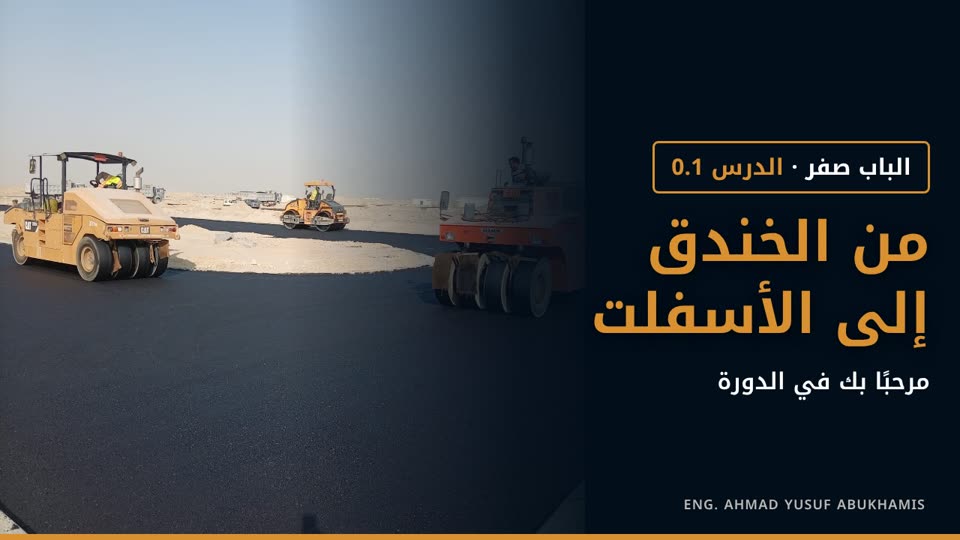
  1. 0.1 Welcome to the course: from the trench bed to the asphalt surfaceWatch free
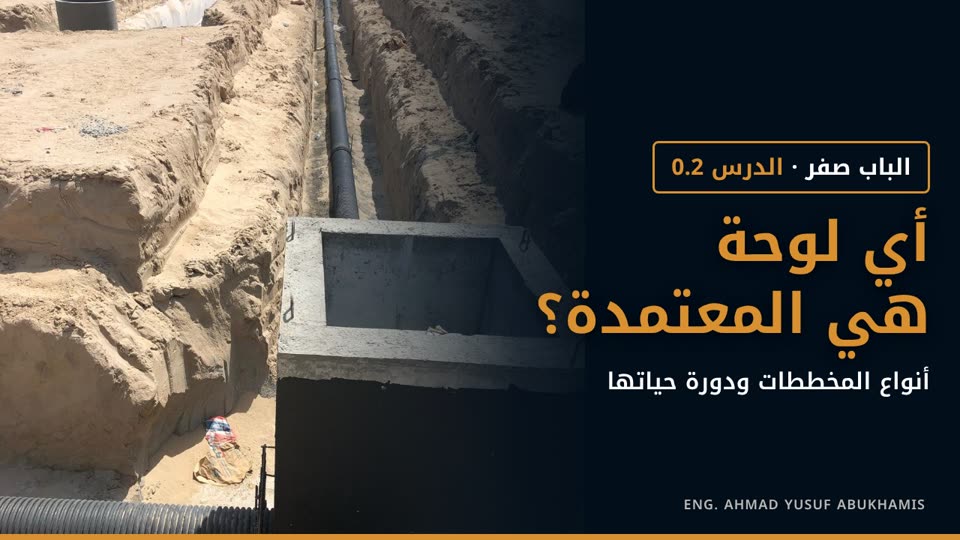
  2. 0.2 Drawing types: contract, shop and as-built drawings, and a sheet’s life cycleWatch free
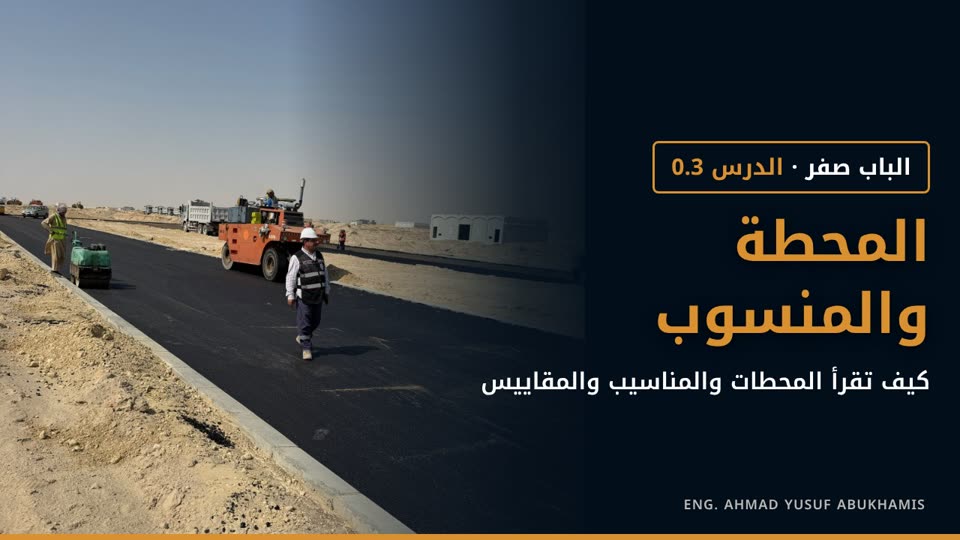
  3. 0.3 Stations, levels and scales: the basics of reading a drawingWatch free
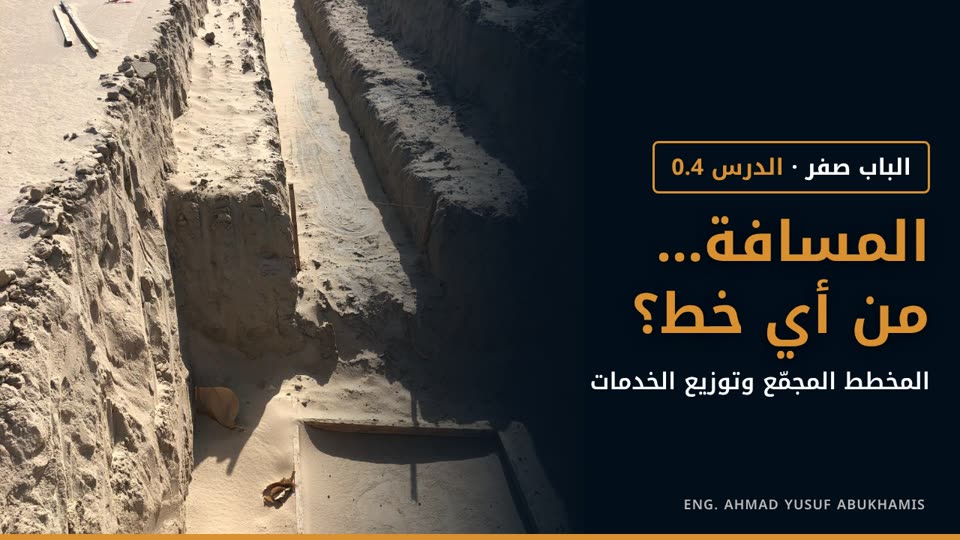
  4. 0.4 The composite plan and utility corridors in the road reserveWatch free
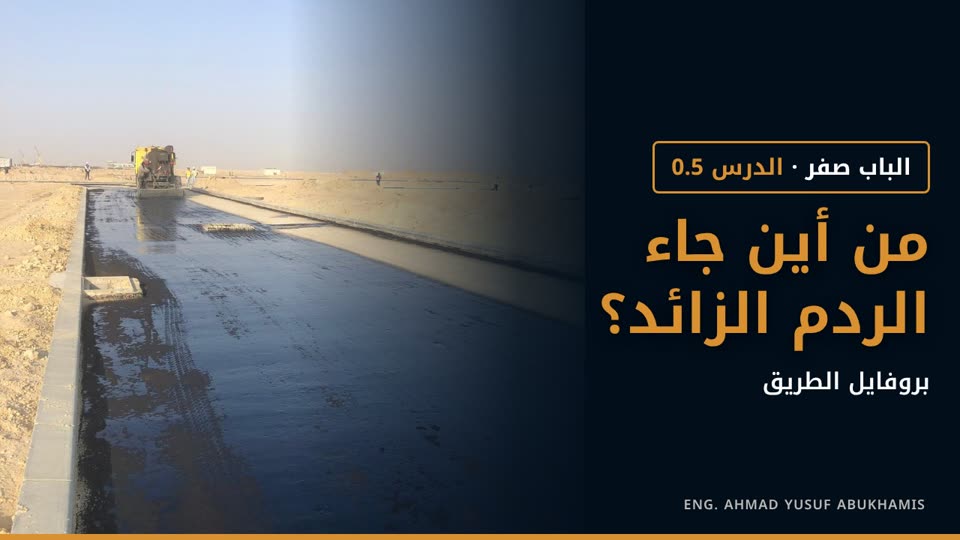
  5. 0.5 The road profile: from contract to shop drawing, and checking existing ground levelsWatch free
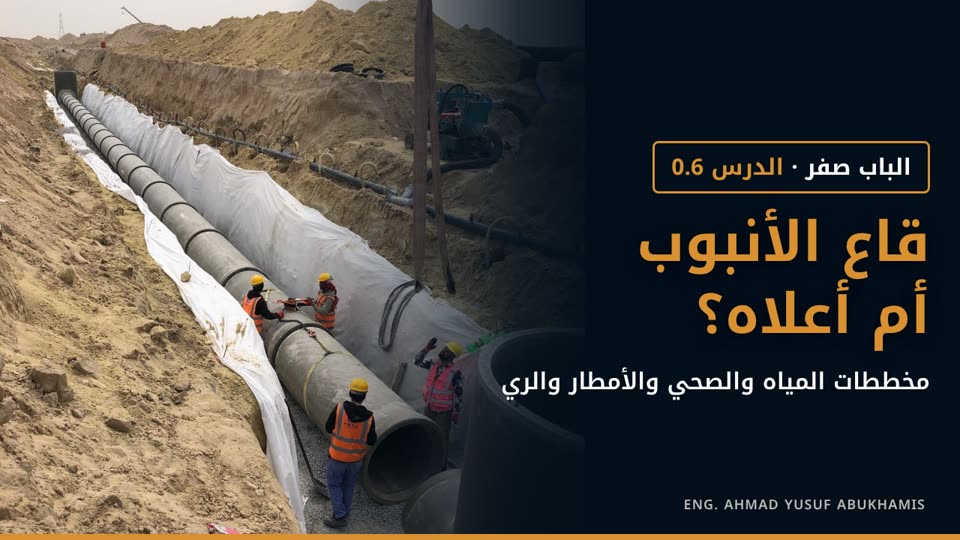
  6. 0.6 Reading water, sewer, stormwater, irrigation and roundabout drawingsWatch free
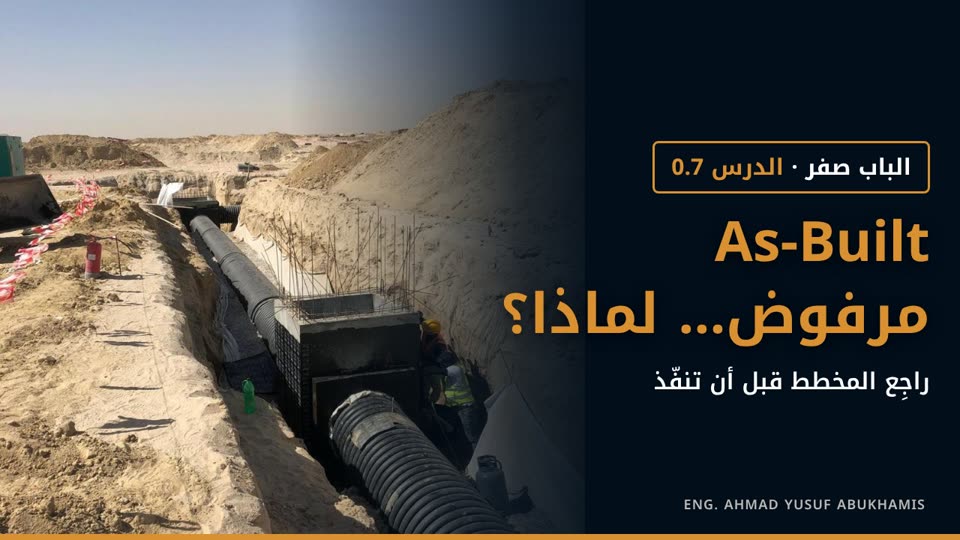
  7. 0.7 Review the drawing before you build: comparison, as-built and checklistsWatch free
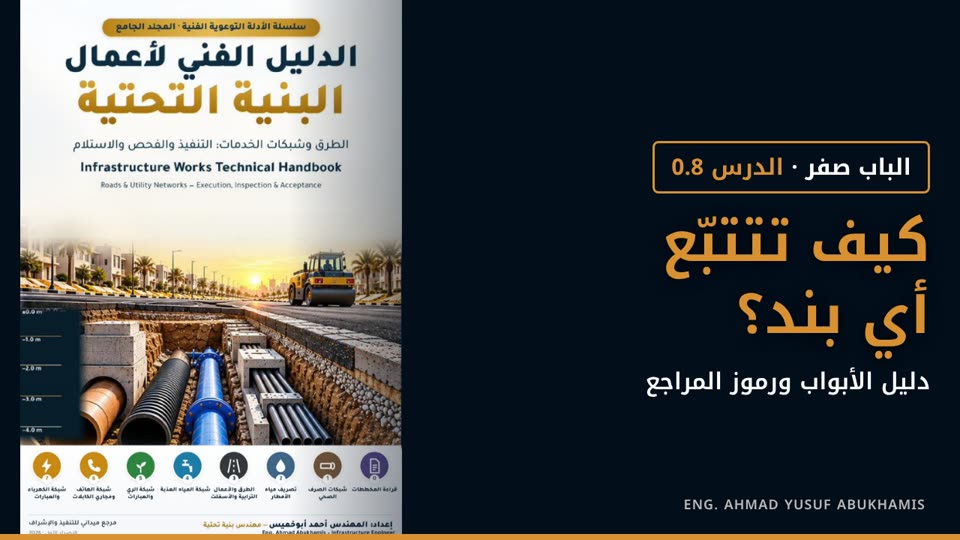
  8. 0.8 How to read the technical guide: chapter guides, reference codes and tracing a clauseWatch free
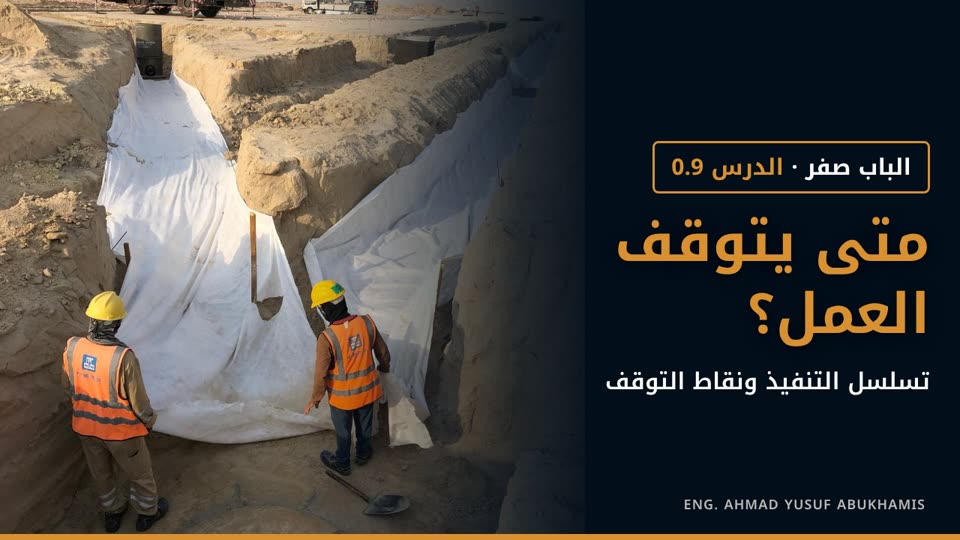
  9. 0.9 The project map: execution sequence, hold points and inspection requestsWatch free
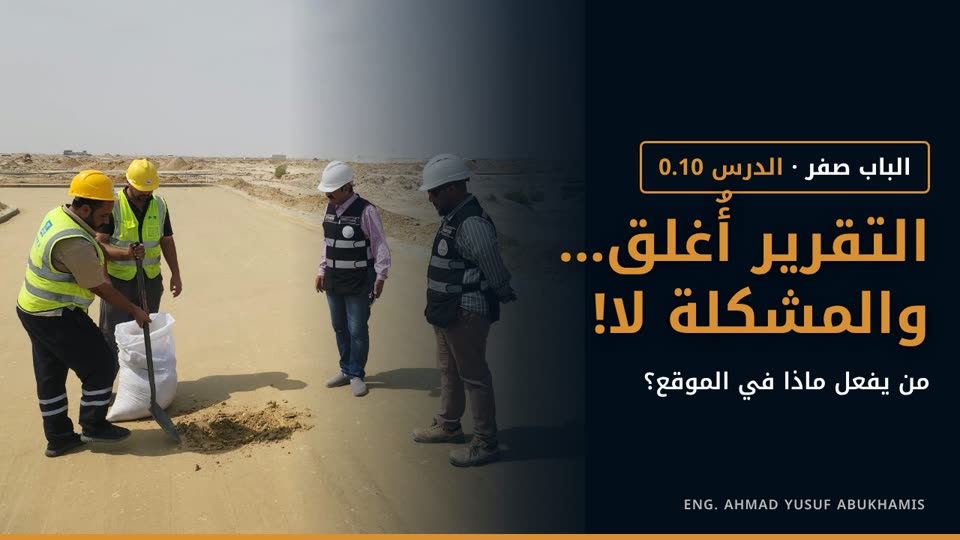
  10. 0.10 Who does what on site: contractor, supervision, NCR, RFI and the daily reportWatch free
  11. 0.11 اختبار الوحدة 0Soon
Unit 1 Site preparation, earthworks and trenches Udemy · 14 lessons
  1. 1.1 Safety before the first excavation: permits, traffic management and site safetyFree preview on Udemy
  2. 1.2 Existing services before machine digging: notices, hand detection and trial pitsUdemy
  3. 1.3 Benchmarks, setting out, original ground levels and clearingUdemy
  4. 1.4 The language of soil: classification, Atterberg limits and the CBR testUdemy
  5. 1.5 Compaction and field density: why everything refers to Modified ProctorUdemy
  6. 1.6 Cut and fill from drawing to site: the LR02 road exampleUdemy
  7. 1.7 From compacted to hauled volume: measurement, balance and acceptance pointsUdemy
  8. 1.8 Fill materials: suitable, unsuitable, borrow and stockpilingUdemy
  9. 1.9 Executing fill: zones, foundation preparation, compaction steps and equipmentUdemy
  10. 1.10 Excavation and backfill around structures, pipes and manholesUdemy
  11. 1.11 Trench excavation: groundwater, dewatering and trench supportUdemy
  12. 1.12 The trench in one section: depth, width and side slopes for a DN 800 lineUdemy
  13. 1.13 Unit 1 summary: common rejection points in earthworksUdemy
  14. 1.14 Unit 1 quizInteractive quiz
Unit 2 Sanitary sewer networks and manholes Udemy · 12 lessons
  1. 2.1 The gravity sewer network: components, materials and governing referencesUdemy
  2. 2.2 Reading and reviewing sewer drawings before constructionUdemy
  3. 2.3 Manhole calculations: three examples from a real projectFree preview on Udemy
  4. 2.4 Choosing the Polycrete manhole type: table ID-SSTC-008, then the manufacturer catalogueUdemy
  5. 2.5 Installing the manhole: base, orientation, body and deep manholesUdemy
  6. 2.6 Laying HDPE lines (below Ø500) and concrete encasementUdemy
  7. 2.7 Polycrete pipes (Ø500 and above): choosing the bedding and laying stepsUdemy
  8. 2.8 Backdrop, benching and internal coatingUdemy
  9. 2.9 Sewer line tests before backfill: mandrel, air, water and manhole tightnessUdemy
  10. 2.10 Backfill around pipes and manholes, then CCTV and deflection after backfillUdemy
  11. 2.11 Handing over the sewer network: common mistakes and the site engineer checklistUdemy
  12. 2.12 Unit 2 quizInteractive quiz
Unit 3 Stormwater drainage networks Udemy · 18 lessons
  1. 3.1 How a stormwater network works: components, references and the difference from sewerUdemy
  2. 3.2 Reading shop drawings and checking the profile by calculationUdemy
  3. 3.3 Stormwater execution sequence and hold points (13 steps)Udemy
  4. 3.4 Manhole types, angle manholes and reading the dimension tablesUdemy
  5. 3.5 Worked manhole examples (1–3)Udemy
  6. 3.6 Worked angle-manhole examples (4–5) and shop drawing reviewUdemy
  7. 3.7 Service conflicts at different levels: rules and solutionsUdemy
  8. 3.8 The typical pipe section: bedding, surround and protection typesUdemy
  9. 3.9 Materials, handling, laying, joints and control with sight railsUdemy
  10. 3.10 Building the manhole on site: risers, precast parts, pipe connections and the angle manholeUdemy
  11. 3.11 Tests before cover: mandrel, air and internal inspectionUdemy
  12. 3.12 Benching, steps, ladders and internal liningUdemy
  13. 3.13 Gullies: types, connections, encasement and framesUdemy
  14. 3.14 Concrete encasement and external waterproofing of structuresUdemy
  15. 3.15 Deflection, backfill, CCTV and handoverUdemy
  16. 3.16 Culverts (1): types and connecting pipes to the box culvertUdemy
  17. 3.17 Culverts (2): headwalls, kerb opening and hold pointsUdemy
  18. 3.18 Site mistakes summary and unit 3 quizUdemy
Unit 4 Potable water networks Udemy · 8 lessons
  1. 4.0 How the potable water network works: function, components and place in the road sectionUdemy
  2. 4.1 Water network materials: approval, factory inspection, receiving and storageUdemy
  3. 4.2 MEWRE 2022 specifications for ductile iron pipes: Kuwait conditions, coating, lining and jointsUdemy
  4. 4.3 Excavating and preparing the water trenchUdemy
  5. 4.4 Laying, jointing and allowable deflectionUdemy
  6. 4.5 Polyethylene sleeving (AWWA C105)Udemy
  7. 4.6 Valves: types, locations, MEW-2 requirements and testingUdemy
  8. 4.7 Valve guide by type: gate, butterfly, air, washout and pressure reducingUdemy
  9. 4.8 غرف محابس القفل: التصميم وأمثلة محلولةSoon
  10. 4.9 تنفيذ غرف المحابس: العزل والتسكيرة والغرف النموذجية والاستلامSoon
  11. 4.10 محابس الحريق والأغطية والصناديق السطحيةSoon
  12. 4.11 الدعامات الخرسانية (Thrust Blocks)Soon
  13. 4.12 الاختبار الهيدروستاتيكي 6/9 بار: المراحل والتسرب المسموح والتقريرSoon
  14. 4.13 الردم ثم التعقيم والغسيلSoon
  15. 4.14 التوصيلات المنزلية والعدادات الذكيةSoon
  16. 4.15 نقاط الاستلام والأخطاء الشائعة في المياهSoon
  17. 4.16 اختبار الوحدة 4Soon

Lessons marked “soon” are added to the same Udemy course as they are ready, at no extra cost to enrolled students.

Unit 5 Roads: subgrade, kerbs, base course, interlock and asphalt Coming soon

Titles in Arabic: see the Arabic page.

Unit 6 Finishing works and preliminary handover Coming soon

Titles in Arabic: see the Arabic page.

Unit 7 Testing and quality control Coming soon

Titles in Arabic: see the Arabic page.

Unit 8 Site supervision, execution mistakes and field observations Coming soon

Titles in Arabic: see the Arabic page.

Unit 9 Specifications, codes and technical references Coming soon

Titles in Arabic: see the Arabic page.

Unit 0 for free: watch the full lessons

Start here before the paid course: the drawing is the language of the project.
Frequently asked questions

Is the course in Arabic?

Yes. Every lesson is in Arabic in Eng. Ahmad’s own voice, with burned-in Arabic captions, and site terms are given in both Arabic and English.

What is free and what is paid?

Unit 0 (drawings, references, work sequence and site roles) is completely free on this site. Units 1, 2, 3, 4 (52 lessons) are a paid course on Udemy.

Do I need site experience?

No. The course follows the real execution sequence; basic civil engineering knowledge is enough. Start with the free unit 0.

Do I get a certificate?

Udemy gives a certificate of completion when you finish the paid course.

Is access time-limited?

No. Udemy access is lifetime, including lessons added later to the same units.

How does the course relate to the book?

The course is built on the book “Infrastructure Technical Guide”, sold separately on Gumroad.

Coming soon on Udemy Notify me at launch